

Water Safety Education
Resources for Parents
Water safety starts at home! This is a great resource for parents to learn how to teach their children about water safety - for FREE! Learn what skills are appropriate to have at what age and how to speak to your pre-teen about peer pressure around the water.
Water Safety Resources for Parents:

.png)
.png)

.png)


Parent Water Safety Tips, Courses and Info

5 Layers of Drowning Protection
Drowning happens quickly and quietly, so no single prevention strategy is enough. This simple system was designed to prevent water-related tragedies.
Learn more from the National Drowning Prevention Alliance:
_edited.jpg)
Myths vs Realities of Drowning
How the movies depict drowning is a very inaccurate representation of what it looks like in real life.
The consequences of this may include bystanders failing to recognize the signs of someone struggling in the water, taking risky breaks from water supervision and increasing the chances of wearable device failure.
"Dry Drowning" debunked:

Lifejacket Fitting
Did you know that "lifejackets" only come in 3 colours?
Learn more on the Transport Canada website:
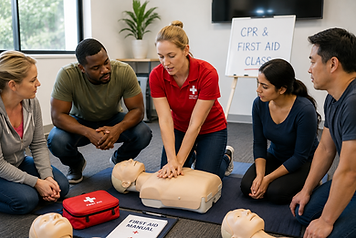
CPR Training
Be prepared in the event of an emergency. Registering for a CPR course will ensure you have the knowledge and skills to provide lifesaving efforts for your family and guests.

Perfect for Parents and Babysitters
The Safeguard course is supervision training for people such as babysitters, camp counsellors, and others who may accompany young people to pools and waterfronts. It is a great thing to ask for when considering hiring someone to watch your children!
Backyard Pool Safety
Did you know that your private pool is the most likely place for children under 5 to drown?
Tips to Keep your Home Safe
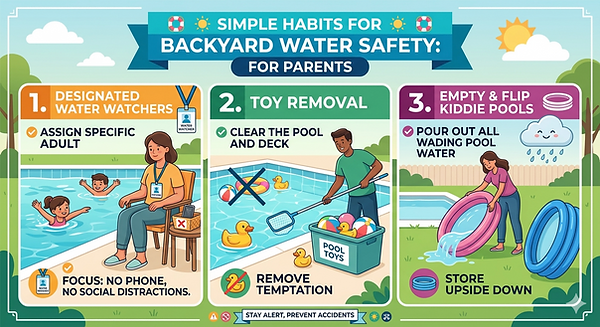
More tips:
-
Control and restrict access to water: Use self-latching gates, four-sided fences and keep furniture weighed down and away from fences.
-
Use alarms: Activate door/window alarms, even when home and awake, to prevent accidental access to the backyard pool.
-
Accessibility Tools: For family members who may require assistance getting in and out of the pool, proper equipment can reduce the risk of injury or drowning.
-
Strategic Furniture Placement: Keep climbable furniture and other items safely clear of the main fence perimeter and moveable items anchored.
Age-Appropriate Swimming Skills
Learn what the water proficiency skills are that you can expect your child to be able to accomplish at their age.
Under 2 Years
Early beginnings in water education mean that children can start developing comfort and confidence in the water as young as a number of weeks old. Skill development can start in the bathtub during regular bathing routine and, by the time they are 4-6 months old, these skills can be transferred to a larger pool to be expanded on. As children grow and develop their awareness, strength and coordination, instructor guidance can show them to create intentional movements in the water so, by the time they are 12 months, skills such as rolling onto their back, understanding balance and where safety is, and the consequences of unfavourable behaviour in the water are all starting to be understood. By the time your child turns 2 years old, they have the ability to jump into water and swim a small distance to an adult, steps or the wall. With enough practice, they can recover and float on their back and they have a clear understanding of water safety rules around the pool. They understand where safety is and are developing the skill and strength to climb out of the water unassisted.
5-6 Years
If your child has been participating in a skill-based curriculum for a few years, you may find that, at this age, they no longer fit into any particular program. Alternatively, you may find it necessary to "skip" levels if you choose a program that starts 6 year olds again with fundamental basics. For children who are 6 and have mastered the basics, you can expect them to be able to have excellent control of their breathing and be able to swim 5-10m of two strokes (usually freestyle and backstroke). Additionally, many children this age have accomplished many underwater skills such as diving for rings in water deeper than they can touch, and somersaults.
8-9 Years
This age is a milestone for countries that participate in the Lifesaving Society Swim to Survive program. As part of the Grade 3 school curriculum, students may participate in a few swimming lessons at their local pool which lead up to the Canadian Swim to Survive Challenge consisting of 3 consecutive parts: 1) Roll into deep water; 2) Tread water for 60 seconds and;3) Swim 50m. While this is a participation activity and not graded, it is a good check-point for parents to know whether or not their child possesses the basic skills in order to survive an unexpected fall into water.
11-12 Years
By this stage, many swimmers have completed traditional learn-to-swim programs and are transitioning into advanced aquatic education. Stroke development now focuses on refining technique across all four competitive strokes while increasing endurance and efficiency. Many children are capable of swimming several hundred metres continuously and have developed the confidence to participate in a wide variety of aquatic activities, from lakes and rivers to boating, paddle sports and recreational swimming. Water education also shifts toward personal responsibility, with swimmers learning to assess risk, recognize dangerous situations and understand how environmental factors such as currents, cold water and changing weather affect safety.
2-4 Years
Children who have had an age-appropriate start to water education are well on their way to developing strong swimming skills in this age group. By the time children turn 3, many should be able to swim a couple of metres with bilateral arm and leg movement and be quite comfortable swimming on both their front and back. By 4 years old, little swimmers are often in the middle of programs designed for preschoolers. In programs such as Marlin's Guppy program, 4 year olds are working on survival skills such as treading water and learning to swim longer distances to safety using a "swim, float, swim" method. Underwater skills you can expect at this age include submerging fully and confidently, floating on and navigating underwater steps and being able to change directions. 4 year olds also have a firm grasp on safe water practices such as waiting for an adult, jumping feet first, walking around the pool and how to climb out at various points including stairs, ladder and a ledge.
6-7 Years
Once children are familiar with bilateral movements in the water, the focus turns to building strength and endurance in propulsion. Swimmers at this age should be able to confidently isolate skills such as stroke-specific kicking, breathing and arm movement, in addition to having the strength and coordination to start putting a couple full strokes together. While they won't be perfect yet, strokes are starting to become more recognizable and less like "doggy paddle".
9-10 Years
By 10 years old, children are starting to move beyond simply learning strokes and are beginning to refine efficiency, endurance and confidence. They should be comfortable swimming 200-300m continuously using freestyle and backstroke, with breaststroke technique coming together. Depending on the program, butterfly may also be introduced. Skills such as diving into deep water are starting, if not already mastered and underwater breath control is being pushed to longer intervals. It is possible that many children in this age group are much further beyond this point are also developing a greater understanding of water safety beyond themselves, including recognizing hazards, understanding weather and environmental conditions and knowing how to respond appropriately in an emergency without putting themselves at risk. A good school curriculum will introduce this age group to water hazards as a dry activity.
12-13 Years
Another milestone age, this time for Grade. 7students. This Lifesaving Society program is called Swim to Survive Plus and includes a similar sequence of skills as the Grade 3 program: Roll into deep water, tread water for 60 seconds and swim 50m but, this time, participants are fully clothed. In addition, participants are taught how to recognize a swimmer in distress, basic water rescue skills and fitness concepts. In swim programs, such as the Lifesaving Society, swimmers are likely starting to finish their progams including the Canadian Swim Patrol (Rookie, Ranger, Star) program which includes basic water rescue and first aid components, in addition to stroke proficiency. These final "lessons" prepare swimmers for further Lifesaving courses such as the Bronze Program (Star, Medallion and Cross). Many swimmers in this age have long completed their swim program and are now participating in other programs such as Junior Lifesaving, Lifesaving Sport and volunteering at their local pools as assistant instructors.
4-5 Years
This exciting age is about transition. By the time kids turn 5, they have gained enough strength and coordination to start building endurance to go longer distances. In Marlin's Guppy program, the final survival fitness challenge for 5 year olds includes a jump into deep water, 15 seconds of treading water and a 5m swim to safety. They are now preparing to start learning some of the main swimming strokes: freestyle (front crawl), backstroke (crawl) and breaststroke. By this time, freestyle basics have already been introduced and backstroke will soon begin. In some countries, programs start with breaststroke but, in either case, skill building, coordination and confidence are starting to rapidly develop. Children in this age range are very confident underwater, often starting to dive for rings in shoulder-depth water, or slightly deeper. They have the ability to hold their breath and are experimenting with pushing these limits.
7-8 Years
By this age, children will have been introduced to at least 3 of the main strokes and, depending on the program, possibly the fourth as well. They should be able to swim 15-25m of freestyle and backstroke, have a strong, propulsive flutter and whip kick. Their overall fitness should include being able to swim 50m, of any stroke, without stopping and underwater skills may include different types of entries, swimming along the bottom and handstands.
10-11 Years
As coordination and strength continue to improve, swimmers begin refining technique rather than simply increasing distance. They are capable of swimming longer distances with improved efficiency (75-100m) and should demonstrate strong body position, rhythmic breathing and effective propulsion in multiple strokes. Many children this age are beginning to understand basic principles of endurance training, pacing and personal fitness. Swimmers who enjoy aquatic activities may also be exploring competitive swimming, artistic swimming, water polo or lifesaving sport. As learn to swim programs wrap up around this age, having a plan for how your child will continue with aquatic programming is crucial to keep their interest and provide future opportunities for sport and employment.
13-17 Years
During the teenage years, those who have remained active in aquatic programs often possess the knowledge and fitness to become leaders around the water. 13-14 year olds may be completing advanced certifications such as Bronze Star, Bronze Medallion, Bronze Cross, First Aid and Assistant Swimming Instructor. At 15 years old, teens are eligible to start courses like National Lifeguard and Instructor programs. In order to keep skills fresh, many teens choose to continue competing in competitive swimming, lifesaving sport or other sports such as water polo and synchronized swimming. Regardless of whether they pursue certifications, teenagers should be capable of confidently swimming long distances (600m+), making sound safety decisions and recognizing that strong swimming ability does not eliminate risk. This age group should understand topics such as alcohol and water, cold-water immersion, boating safety, open water hazards, rip currents, spinal injury prevention and safe rescue principles. Developing sound judgement is just as important as physical ability, as teenagers are more likely to find themselves around water independently or with peers.
This information is meant as a general guideline only. For a lot of reasons, many children may move quicker or slower through these milestones. If you aren't sure where your child should be, speak to your swimming instructor.
Our website links to third-party water safety resources for educational purposes only. Because safety standards, regional regulations, and training curricula vary and change constantly, we cannot guarantee the accuracy, completeness, or authenticity of external content. Clicking these links is done entirely at your own risk. We assume no liability for any injury, loss, or damage resulting from your use of third-party information, and we highly recommend independently verifying all safety protocols with certified local professionals.